
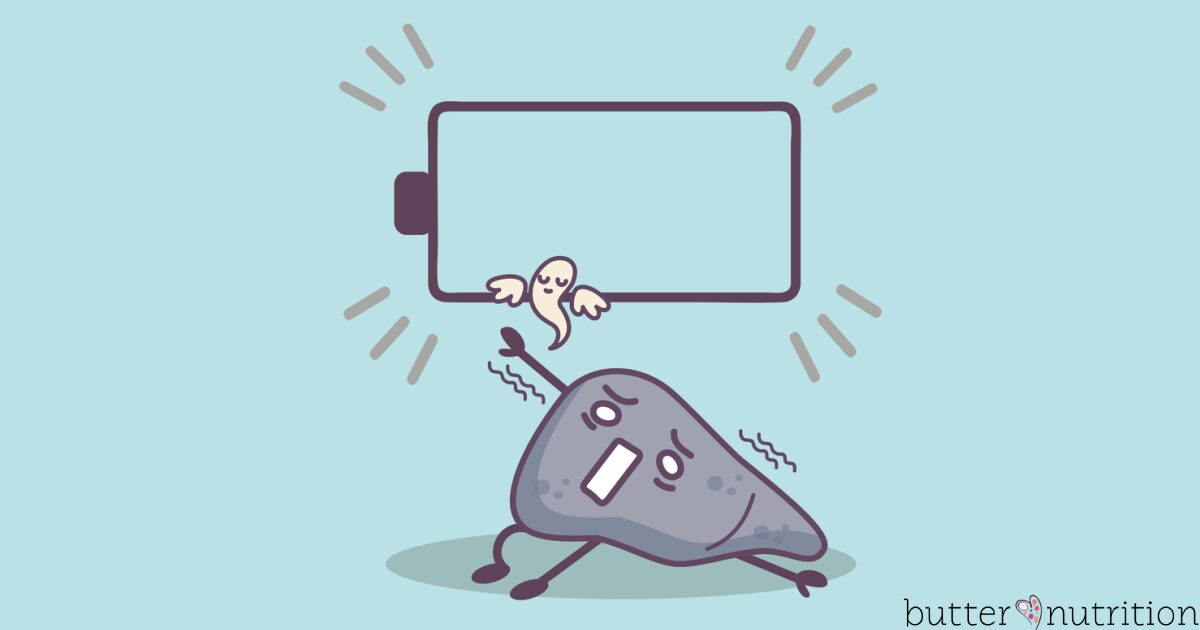
Your liver has a desk job it never gets to leave.
Twenty-four hours a day, seven days a week, new work piles up: hormones, medications, alcohol, metabolic waste, compounds coming from your gut, excess nutrients, and environmental exposures.
Your liver is built to handle this work. But after 40, 50 or 60 years, the piles on your desk can look very different from when you were 25.
And somehow, when the desk gets overloaded, wellness culture's answer is usually to put something else on it.
Another supplement. Another herb. Another detox. A peptide.
Sometimes your liver doesn't need more of your help. It needs less work so it has the bandwidth to catch up.
We already test for excess.
For years, I've used hair and blood testing to look at both sides of nutrition: what are you deficient in, and what do you already have too much of?
Maybe you need more zinc or potassium. But maybe copper is high. Iron is accumulating. You're getting too much vitamin A. Or you're taking supplements you never needed in the first place.
This is why I test. More isn't always better.
But vitamins and minerals are only one pile on the desk.
What about everything you're being exposed to?
Glyphosate. BPA. Phthalates. Pesticides. Mercury. Lead. Arsenic. Mycotoxins.
It's very hard to know how much of this stuff you're being exposed to.
Toxic burden doesn't always look like "toxicity"
I think this is where people get confused about toxic burden.
They expect it to look dramatic. One toxin. One obvious symptom. One smoking gun.
In reality, environmental exposures can affect the body through different pathways, including oxidative stress, inflammatory signaling, and endocrine disruption. Depending on the exposure and the person, the effects may be much less obvious.
Fatigue, headaches, brain fog, skin issues, hormonal symptoms, digestive complaints, feeling unusually reactive-or simply feeling like your body is a little irritated everywhere.
Low-grade smoke without an obvious fire.
Does that mean fatigue or inflammation proves toxic burden? Of course not. These symptoms can have dozens of causes.
But when someone eats well, we've corrected the obvious nutritional problems, the basic labs look good, and there's still smoke?
I want to know what else is on the desk.
Where is all this stuff coming from?
This is where exposure gets interesting because it doesn't necessarily come from an obviously unhealthy lifestyle.
Mercury can come from certain fish. Arsenic can occur in water and foods like rice. Lead can come from older homes, plumbing, soil, work, and hobbies. Glyphosate is a widely used herbicide. BPA and other bisphenols are used in certain plastics and food-contact materials. Phthalates are associated with plastics, fragrances, and personal-care products. Mycotoxins can come from certain foods and water-damaged environments.
You don't have to live next to a chemical plant to have an exposure worth knowing about.
And exposure doesn't automatically mean toxicity. Dose, frequency, the specific compound, and the person all matter.
Before you "detox," wouldn't it help to know what?
This is my problem with generic liver detoxes.
Detox what?
Mercury and glyphosate aren't the same problem. Neither is mold exposure and too much vitamin A.
If your desk is overloaded, I'd like to know which piles we're dealing with.
A seven-day liver cleanse also can't undo decades of habits and exposures. It's like saving money for a week, spending recklessly the rest of the year, and wondering why you're not rich.
Supporting your liver isn't something you do for seven days.
It's a lifestyle; consistently giving it less work to do.
And knowing what's creating the work makes that a whole lot easier.
And if weight is a struggle, certain environmental chemicals can disrupt metabolic signaling and have been studied as "obesogens," while some persistent pollutants can actually accumulate in body fat. This means toxic burden may be one overlooked piece of stubborn weight gain-not because your body simply "stores toxins as fat," but because environmental exposures can interact with the very systems that regulate fat tissue and metabolism.
Now we can see another piece of the puzzle
This is why I'm excited to add the Total Toxic Burden Test to the testing I offer.
Hair and blood testing already help me identify nutritional deficiencies and excesses. Total Tox gives us another piece of the puzzle: environmental exposure.
One urine sample measures 87 markers: 20 heavy metals, 29 mycotoxins, and 38 environmental chemicals, including markers associated with glyphosate, BPA, phthalates, pesticides, mercury, lead, arsenic, and more.
That's what I want testing to do: replace a giant list of possibilities with a much smaller list of things actually worth your attention.
What's your toxic burden?
If your liver's desk is overflowing, the answer probably isn't another pile.
It's figuring out what we can take off.
Learn More About Packages That You Can Add the Total Toxic Burden Test To→
See the full list of markers tested here.
The Total Tox Burden test from Vibrant Wellness has not been cleared or approved by the FDA and is not intended to diagnose, treat, cure, or prevent disease. Detection of an environmental chemical, metal, or mycotoxin does not by itself establish toxicity or prove that the substance is causing symptoms.
References:
- Liu B, et al. Association between bisphenol A exposure and metabolic syndrome: a systematic review and meta-analysis. Environmental Research. 2024. PMID: 38491337. PubMed
- Golestanzadeh M, et al. Association of phthalate exposure with insulin resistance: a systematic review and meta-analysis. Environmental Science and Pollution Research. 2021. PMID: 34498187. PubMed
- Pesticide exposure and risk of metabolic syndrome: a systematic review and meta-analysis. 2022. PMID: 35439599. PubMed
- Association between heavy metal exposure and metabolic syndrome: a systematic review and meta-analysis. 2024. PMID: 39610503. PubMed
- National Institute of Environmental Health Sciences. Obesity and environmental exposures. National Institutes of Health. NIEHS overview of obesogens and obesity


Join the Conversation